Remembering Revenant Magazine, the Premiere Zombie Magazine
2007 - 2008
Revenant Magazine, the premiere zombie magazine was devoted to bringing zombie fans from around the world the latest news and information from within the zombie genre. This magazine was by fans for fans.
The new owners of this domain, big zombie fans themselves, have chosen to keep the memory of the magazine alive by posting original 2007 - 2008 archived content, as well as images and information from other outside sources.
FACEBOOK Page created - January 5, 2008
Revenant is an exciting endeavor for us and we really intend to cater to all zombie fans because that’s what we’ve been since we were kids.
Revenant is in a sense a pretty groundbreaking project. The first online zombie magazine to bring you all the latest news and info. Created by fans for fans.
We intend to provide informative and interesting articles and reviews, incredible artwork and a zombified forum for all the undead to dwell. I really encourage people to contact us. Let us know what you think of the site, whatever’s on your mind.
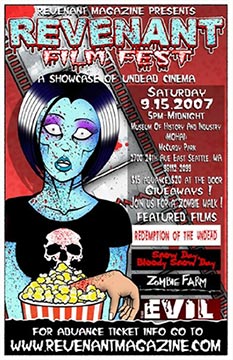
The very awesome poster for the first annual Revenant Film Festival. Design by Calvin Von Crush of Von Crush Designs.
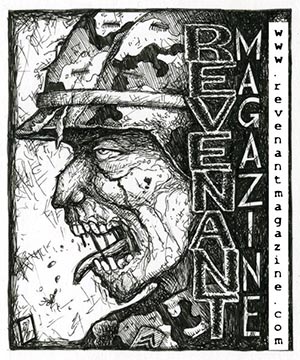
Revenant promo flyer. Artwork by Abby Perry.
~~~~~~~~~~~~~~~~~

"In its heyday this was clearly the best and only mag for zombie fans and was read cover to cover and over and over. It turned people on to films, products, and culture that may otherwise have been beyond their reach. A client asked us to buy advertising space for a Batman themed online retailer, MoonAtMidnight.com, thinking that zombie fans might share some interest with Batman fans. This client has the best collection of Batman t shirt designs available and the best displays at the time. We couldn't find any market research to demonstrate an overlap of zombie and Batman interests, but it seemed to be a good match. But for some reason, the publishers held up the ad and we never were able to negotiate a placement deal before the mag was shut down. We still think this was a great venue for a Batman - zombie meeting of the minds, but we'll never know." Tony Charles, ZoomZoom
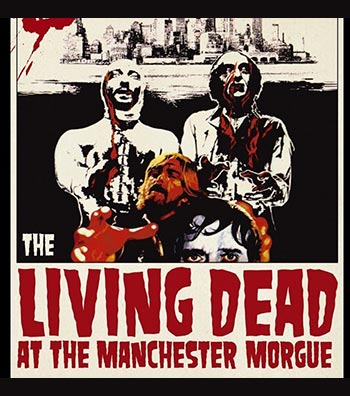
The Epic Zombie Shocker Returns As You've Never Seen It Before!
Two traveling companions, George (Ray Lovelock of AUTOPSY) and Edna (Christine Galbo of THE KILLER MUST KILL AGAIN), come across a small town infested with the "living dead" that are satisfying their cannibalistic hunger on anyone they come across. Discovering that an agricultural machine using radiation waves is at the root of all the havoc, George and Edna fight for survival and their innocence as they are pursued by a relentless detective (Arthur Kennedy of THE ANTICHRIST and FANTASTIC VOYAGE) who is convinced they are responsible for the ghoulish acts of violence plaguing the countryside.
Also know as LET SLEEPING CORPSES LIE and DON?T OPEN THE WINDOW, this carefully constructed and beautifully photographed tale of the undead roaming the English countryside comes from acclaimed Spanish director Jorge Grau. Blue Underground is proud to present THE LIVING DEAD AT MANCHESTER MORGUE in hair-raising High Definition, fully restored and remastered from the original camera negative, and bursting at the seams with eye-opening Extras!
Back to the Morgue - On Location with Director Jorge Grau
Zombie Fighter - Interview with Star Ray Lovelock
Zombie Maker - Interview with Special Effects Artist Giannetto De Rossi
2000 Interview with Director Jorge Grau
Theatrical Trailers
TV Spot
Radio Spots
Poster & Still Gallery
Color
7.1 DTS-HD; 5.1 Dolby Digital Surround EX; Original Mono
English
Optional Subtitles: English SDH, French, Spanish
1.85:1
1974
93 Mins
Not Rated
Region Code: ALL
"One Of The Best Zombie Films Ever Made!"
-DVD Drive-In
"An Impressively Intelligent, Inventive And Genuinely Scary Film!"
-DVD Times
"Required viewing by anyone with an interest in damn good zombie flicks... The new transfer is superior to the old in every possible way!"
-Scooter McCrae, Fangoria
"This is a film that every zombie fan should have in their collection and Blue Underground has graciously delivered the ultimate edition of this classic film with shocking thoroughness!"
-Geoff Bough, Revenant
"HIGHLY RECOMMENDED! Blows away all prior DVD incarnations of the film!"
-Ian Jane, DVD Talk
"An overlooked gem... Blue Underground has come through with a transfer that celebrates the film's artful compositions and rich colors, as well as its crucial sound mix!"
-William Simmons, Sex Gore Mutants
"A genuinely creepy tale... This is an enjoyable entry into the zombie canon!"
-Judge Jim Thomas, DVD Verdict
"Jorge Grau's direction is superb, delivering some of the most terrifying sequences ever filmed... Blue Underground's Special Edition can already be deemed one of the best horror DVDs of the year!"
-George R. Reis, DVD Drive-In
~~~~~~~~~~~~~~~~~
The Living Dead At Manchester Morgue 2-disc Special Edition DVD
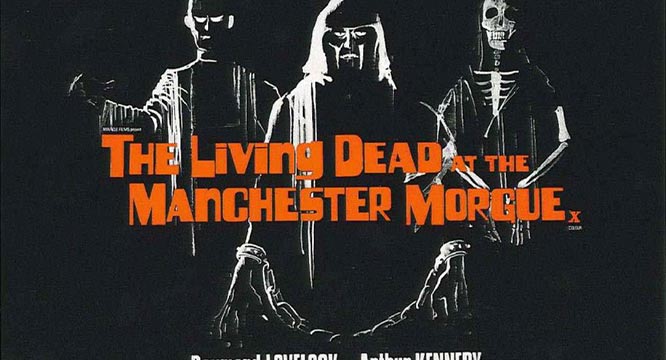
This is a review of the Blue Underground 2 disc special edition dvd of The Living Dead At Manchester Morgue. Please also see John Reppion's review of the film.
The Living Dead At Manchester Morgue is a classic film of the zombie subgenre. A beautifully shot film depicting zombies roaming the English countryside, it is not only brilliant visually but as most zombie films out of this time period do, it had a lot to convey socially as well.
The film was directed by famed Spanish director Jorge Grau and was shot partially in various cities in the English countryside with the opening montage shot in Manchester. The film was also partially shot in Italy.
The opening of the film reminds us of the destructive tendency of our own human nature, pollution. We see a montage of waste and pollution throughout Manchester as main character George rides his motorbike throughout the city. George (Ray Lovelock) is on his way out to the Lake District to renovate a house with some of his friends when his motorbike is run over by Edna (Christine Galbo) who is on her way to visit her ill sister who is trying to kick her drug habit.
George persuades Edna to give him a lift to his destination and the two take off together. The pair soon wind up lost and Edna is accosted by the local drunk who we later learn has been dead for days. While Edna was being attacked, George is off asking a local farmer directions and spots a strange looking machine up on a hillside that is sending out ultrasonic sound waves as a form of pest control. We see a clip of ants devouring each other in a crazed frenzy.
The two soon head off to Edna’s sister’s house where they learn that her sister’s husband has recently been murdered by a strange man that fits the description of the vagrant that attacked Edna earlier. The police inspector seems to think that Edna’s sister murdered her husband while high. The inspector (Arthur Kennedy) is an arrogant, bigoted, curmudgeon prejudiced towards the beatnik type that he labels George as.
George and Edna see a picture of the man that attacked her earlier in a local newspaper and find that the man was pronounced dead in the paper. They soon reluctantly race off to the cemetery to uncover this mystery.
The Living Dead At Manchester Morgue is an exceptional film on so many levels; visually it is stunning as the vast shots of the English countryside are bright and vibrant. The pallor of the zombies creates an amazing contrast as the lush green foliage accentuates the gleaming red eyes of the undead.
The sound is also exceptionally well done. Grau wanted to create a sort of sonic soundscape that intensified the soundtrack when the zombies were present along with low moans of the zombies. This mix worked very well and really added to the creepy, ominous tone of the film. The sound was done by Giuliano Sorgini and this was one of the first feature length horror films to have a stereo soundtrack.
While some fans get lost in translation with dubbed audio, The Living Dead At Manchester Morgue audio dubs act as an almost comedic relief. George has a more direct, cockney accent which at times can be quite funny when he is expressing his outrage. All of the dub tracks work well for the characters and is only a very minor note.
The special effects maestro Giannetto De Rossi (Zombie) provides full color blood and gore to the film. De Rossi is a legend in his craft and one that I drew inspiration from in my own special effects work. There is not an over-the-top amount of gore in the film but certainly enough to please the gore hounds.
The Living Dead At Manchester Morgue is a classic film, having followed in the footsteps of George Romero’s Night of the Living Dead which came out only 5 years prior. Having been released in the times of the legendary Romero films, The Living Dead At Manchester Morgue is an often overlooked film by the typical zombie film fan but one that in my eyes revolutionized the subgenre by bringing the zombies closer to home and further modernizing the mythos.
Blue Underground has recently given The Living Dead At Manchester Morgue the much deserved special edition treatment by way of a fully re-mastered 2 disc special edition dvd. The dead have never looked so good in this fully restored, high definition widescreen transfer from the original camera negative. The vibrant colors of the English countryside are stunning and the sunken pallor of the zombies is captured with amazing detail.
The sound is fully updated and absolutely incredible in Dolby 5.1 surround sound. I watched the film on my high-end surround sound system and it was pretty damn creepy at times. You realize sounds you were missing during previous viewings. The disc is absolutely packed with extra content including; trailers, stills, a poster gallery, featurette interviews with director Jorge Grau, star Ray Lovelock, and special effects make-up artist Gianetto De Rossi.
I particularly enjoyed the featurette with Jorge Grau “Back to the Morgue” where he revisits the shooting locations with journalist Gian Luca Castoldi. A 45 minute tour through the shooting locations in England with a very interesting commentary by Jorge Grau as he answers questions from Gian Luca Castoldi.
This is a film that every zombie fan should have in their collection and Blue Underground has graciously delivered the ultimate edition of this classic film with shocking thoroughness.
Be sure to enter our contest for your chance to win 1 0f 3 copies of Blue Underground’s ‘The Living Dead At Manchester Morgue’ special edition dvd!
~~~~~~~~~~~~~~~~~
Zombies for Zombies by David P. Murphy - Illustrated by Daniel Heard
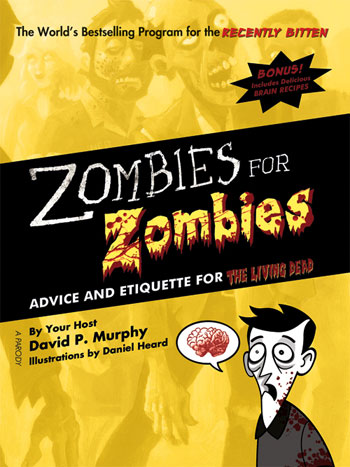
Review by Geoff Bough
Zombies for Zombies is a very fun title from author David P. Murphy. There have been loads of books on how to prepare for the zombie outbreak and ultimately how to defend against zombies. Murphy takes a more sympathetic approach and delivers a guidebook for the misguided zombies themselves!
The book is layed out in a fashion akin to the overly popular "...for dummies" books, of course with a very healthy dose of tongue-in-cheek hilarity. Each chapter provides tips and guidance on making your post-humous years the best of your undead life. From tips on what pharmaceuticals to use to cover the fact that you're a rotting corpse, to sex and religion. Zombies for Zombies is the quintessential guidebook for the undead.
The book is creatively illustrated by artist Daniel Heard. Heard's cartoonish art perfectly lends itself to the subject matter and really makes the book shine.
Some of my favorite moments from the book were the section on zombie haircuts, the section on zombie diets...complete with some hilarious recipes, and the section entitled "Koma Sutra" with some funny zombie sex tips, which I found myself a little creeped out for reading.
If you're a fan of zombies, or you know someone that is, Zombies for Zombies would make a perfect gift for yourself or a friend! The holidays are coming up quick so grab a copy today!
~~~~~~~~~~~~~~~~~
Geoff Bough - Revenant Magazine Editor In Chief
In preparing to rack my brain to determine why zombies interest me so much I drew a parallel between man and zombies. If you think about it, it’s really not that far fetched. They both possess the following similar characteristics; a lack of social interaction, minimal purpose or direction and a lust to consume. Now, I’m not saying that I think man has devolved into the walking dead but pointing out the declination of today’s social communication and values. It’s interesting to me that people just seem to be driven by some unnatural force and really have minimal respect for others.
I do also really enjoy the social threads woven between survivors in the more interesting zombie films. The personalities often tend to clash and deteriorate as the film progresses and characters experience a sense of hopelessness. At times I become unsure of where the true danger lies. Are the living dead the imminent threat or is it the emotionally unstable survivor? It would be almost ironic to be holed-up in a fortified area only to be hunted by a psychopathic fellow survivor having a mental meltdown.
Now on to what scares me about a zombie outbreak. I think there are a number of things to fear when put in an apocalyptic instance. For one there is a brooding, overwhelming sense of uncertainty which poses many often unanswerable questions. How wide is the outbreak? How did it start? Is my family okay? Will I survive this? Given the situation, having to ask myself these questions would chill me to the bone. Another truly terrifying example is an immediate detachment of emotion. If a friend or family member becomes infected, you might not have time to say goodbye. You might be put in a situation where you are surprised by a loved one who has turned without your knowledge. There has to be an almost instant severing of emotion where one must realize that this creature is no longer my friend or family but is out to eat my flesh.
Revenant is an exciting endeavor for me and I really intend to cater to all zombie fans because that’s what I’ve been since I was a kid. Revenant is in a sense a pretty groundbreaking project. The first zombie magazine to bring you all the latest news and info. Created by fans for fans. We hope to provide informative and interesting articles and reviews, incredible artwork and a zombified forum for all the undead to dwell. I really encourage people to contact us. Let us know what you think of the mag, whatever’s on your mind.
Drop us a note detailing how you would survive an outbreak of the undead, got an article about the rate of infection your itching to get off your chest? Give us a ring. We like reading mail, good or bad.
We are currently hard at work designing the printed aspect of Revenant Magazine! Exciting times are at hand and we hope to debut our undead baby to the world as soon as we're able. Enjoy the mag everyone!
Favorite Zombie films: Night of the Living Dead, Dawn of the Dead, Cemetery Man, Zombie, Shaun of the Dead, Night 90’.
~~~~~~~~~~~~~~~~~
The Morningstar Strain: Plague of The Dead
reviewed by Wayne Simmons author of 'Drop Dead Gorgeous.'
Author Z.A Recht / Publisher: Permuted Press
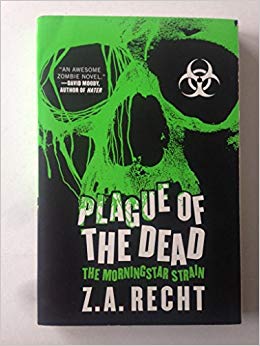
There’s something to be said for innovation. Especially in the horror genre, where tired-and-tested formulae such as The Slasher Movie TM, The Remake TM or, the industry’s current little toe-tagged darling, The Torture Movie TM can get happy-slapped in our faces to the point where we hear ourselves scream with tedium as opposed to fear.
Take, for example, the hugely inspirational j-horror classic, Ring. Once the bed-wetter supreme amongst even the most cynical of fanboys, it wasn’t long before every Tom, Dick and Samara were donning a white dress and combing their hair forward to creep around our screens. Soon, the Koji Suzuki/ Hideo Nakata classic became a cliché. And so the cycle continues.
It happens in literature too. Take the vamp scene, for example. 1816 saw what was, perhaps, the first popular vamp tale in print – John Polidori (or was it really Byron?) published The Vampyre. Irish writer, Le Fanu, followed with Carmilla before the classic Dracula hit the shelves a little later. Now, of course, we have the Anne Rices leading a foppish army of frilly-shirted hack-from-hell’s sucking gallons of blood out of the genre. No wonder The good Count looks a bit pale on it, these days...
But sometimes, it must be said, a traditionally modeled book or film comes along to remind us, again, why we liked the cliches so much in the first place. Like Dawn Of The Dead (2004) or even, it must be said, the likes of Wesley Snipe’s first outing as Blade. Something that, whilst bringing little new to the table, still sates our horror-hungry blood-and-guts the way we liked it in the good old days.
Plague Of The Dead, a zombie novel by ZA Recht, is one of those rare jewels. Promising nothing but a good ol’ zombie romp with all the cliché boxes ticked (military: CHECK, virus: CHECK, bare-chested wrestling between token good-guy and token bad-guy: CHECK) Recht’s apocalyptic horror novel brings zero new to the table. But what it does, it does fairly well.
Published through Permuted Press, fast becoming one of the most popular underground horror publishers, Plague starts off with your average virus spreading through your average Middle East. Scientists and military are wheeled out as we learn of a typically terrifying strain known as Morning Star that has taken grip of the human race, spreading through traditional Romero means to turn the world’s infected into flesh hungry zombies. Our retreating GI s find themselves onboard the USS Ramage, sailing away from an overrun Middle East towards the good ol’ US of A, where things aren’t faring much better for the human race.
Nothing new here, then. We’ve seen all of that before. Hell, we’ve even played it on our Playstations (Dead Aim, anyone? Cold Fear?) yet, what separates Plague from much of the ever-increasing pile, is the quality of writing on display. Recht’s description of the Middle East’s meltdown, for a start, is a delight for apocalyptic fans everywhere. His cocktail of medical and military fumbling around in the chaos is indulgently played out, boasting second-to-none research to beat contemporaries hands-down in terms of setting the scene. Things progress in a similarly vivid fashion, infection gripping the motley crew of HSS Ramage with the kind of pistol-waving paranoia we’ve all come to know and love over the years.
Of course, not all’s rosey here. The book’s climax becomes something of a fiasco with our previously po-faced military turning somewhat slapstick. Character development is limited to a few key players, with many of the military simply blending into one-another. Oh, and then there’s that cheese-fest wrestling match that I was alluding to earlier. It does actually happen. And, yes, a beautiful woman stands by gasping suitably.
But with sequels in the offing, we can only hope that Recht irons out the creases and gets, what could be a very promising franchise, back in order.
Plague Of The Dead is a good debut from a promising author who, whilst not bringing anything (at all) new to the genre, will certainly satisfy the more traditional zombie fan. This book does for zombie literature what Robert Kirkman has done for zombie comics, teaching the many, many imitators of Romero in the horror industry, today, how bare-faced rehashing should be done.
~~~~~~~~~~~~~~~~~
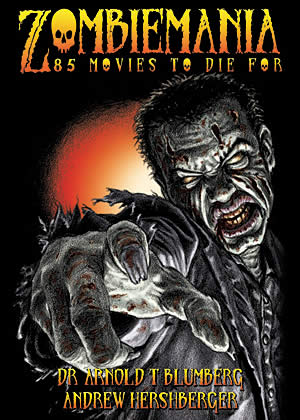
Zombiemania: 80 Movies To Die For
reviewed by John Reppion co-creator of 'Raise The Dead.'
Authors: Dr. Arnold T. Blumberg and Andrew Hershberger
Publisher: Telos
Specifications: Paperback, 500 pages
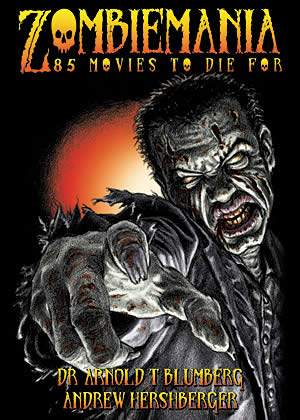
Zombiemania: 80 Movies To Die For is an exhaustive piece of work; 80 movies handpicked by Blumberg and Hershberger, each one meticulously reviewed, dissected and cross-referenced. This isn’t just a catalogue of seminal works however, there are some real stinkers included, giving the book a real sense of balance and worth; because knowing what not to bother with is just as important as knowing what you should beg, borrow or steal to get hold of.
Blumberg and Hershberger have come up with an ingenious set of categories by which each film can be classified and evaluated. These are genre specific things like Outbreak Location, Necrology (physical and behavioural characteristics of the zombies) and 6 Degrees Of Necrophagia (references, homages and down right rip offs from other films); important details which are sadly lacking from the Time Out film guide and the like. The classification system is a key element of the book, transforming it from a mere compendium into a useful and worthy piece of reference material for both armchair enthusiasts and academics alike.
Whilst I didn’t always agree 100% with the film analyses inZombiemania, this merely lead to a sense of frustration at not being able to actually engage Blumberg and Hershberger in conversation and “join in” with the whole debate. Possibly over a few beers. Their combined style is casual, friendly and engaging whilst still packing in the important facts and juicy trivia.
In addition to the 80 films covered in detail there is also an extensive index of over 550 films complete with brief synopses and alternative titles. And, as if that weren’t enough, there’s also a very eloquent afterword from Mark Donovan of Shaun Of The Dead fame.
As far as I’m concerned Zombiemania: 80 Movies To Die For is a must have for everyone with an interest in zombies and zombie cinema. Whether you’re an aspiring geek or an established anorak, this book has more than earned its place next to World War Z on your shelf.
~~~~~~~~~~~~~~~~~
ZMD: ZOMBIES OF MASS DESTRUCTION
Review by Geoff Bough
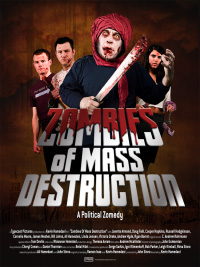
ZMD: Zombies of Mass Destruction seamlessly combines horror and comedy for a rollercoaster ride of hilarity and social commentary in this feature length production from debut director Kevin Hamedani and Typecast Pictures.
There's often a wide gamut of polarity when it comes to what zombie fans like about the subgenre. Some only appreciate the more serious appocalyptic zombie films, and then there's that often difficult to perfect horror-comedy which everyone appreciates when done well. Such is the case with ZMD, the story of a small and sleepy coastal town with a big problem...zombies!
The film is set in 2003 right about the beginning of the Iraq war and takes place in the small coastal town of Port Gamble, Washington. An actual coastal ghost town in Kitsap County which in itself has an eery aspect about it.
ZMD presents the stories of two Port Gamble residents; Frida (Janette Armand) an Iranian-American college student and Tom (Doug Fahl) a gay businessman returning to Port Gamble to come out to his mother accompanied by his boyfriend Lance (Cooper Hopkins).
As night comes, the zombies come out en masse and we are treated to an incredibly hilarious scene with Frida and her stoner boyfriend that is sure to soon become one of those iconic zombie film moments that everyone talks about.
The overtly conservative town seems to be oblivious to the new threat of zombies and are quick to level blame on Frida and Tom. Frida is labeled as a terrorist by her super-patriot neighbors and held captive. Tom and his boyfriend Lance flee his mother's house after dinner didn't go so well and end up seeking refuge in the local church. After some incredibly funny jibs with the bleary church-goers, Tom and Lance are cornered and blamed for being homosexuals.
As with many zombie films, the socio-political commentary is thick and blatant and captures that feeling of misplaced aggression and ignorance in our country that while still present today was brimming in 2003.
The jokes are fast and never let up, a strength of the writing team's perfect blend of gut-ripping horror infused with high-brow comedy. The special effects makeup here is top-notch and come from 1313 FX's Tom Devlin who has an extensive career in the special effects make-up field.
While I can't really say that the film was scary to me, it's scary to think that the views and commentary that are joked at in the film are genuinely shared by some devolved sect of people. The soundtrack definitely provided that dark and ominous tone that harkened back to the horror films of the 70's and 80's.
It's a wonder why ZMD has not been picked up for distribution as this film begs to be seen by a wider audience. Debut director Hamedani and Typecast Pictures have definitely crafted an inctedible film that deserves the full treatment.
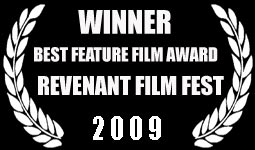
We had the pleasure of screening ZMD at the 2009 Revenant Film Festival and we are pleased to present ZMD with the BEST PICTURE AWARD! Congrats to the cast and crew of the film and to everyone at TYPECAST PICTURES!
~~~~~~~ LATEST NEWS ~~~~~~~
|
|
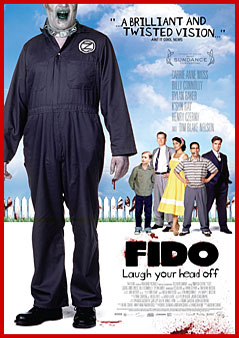
FIDO at Seattle International Film Festival TOMORROW - May 30th, 9:30pm @Neptune Theater! Andrew Currie's zombie-comedy about a young boy's pet zombie named 'Fido' is screening tomorrow night, May 30th at 9:30pm at Seattle's Neptune theater in conjunction with SIFF.
Sick new features at FearNet - upload your own user generated content and check out an on-set update from SAW IV director Darren Lynn Bousman! One of the web's top horror sites has become even more horrifying with the additon of some very awesome new features. You can now create and upload your very own content! In additon, they also have some very cool exclusives! Here's what you can expect from FearNet: -Straight from the set of Saw IV, Darren Lynn Bousman is delivering news and updates; he will also talk about the remake of Scanners and Repo: the Genetic Opera - Upload user generated video, audio, photos and written material and search, sort, rate and comment on other fans’ content - Create a gallery to showcase your goods! FEARnet will also create galleries for special events and themes. Who knows, your masterpiece could be on the front page! -Enjoy the integrated video player – now available as a full screen – which allows fans to watch a film and simultaneously read about its cast and crew and chat or post to the community without leaving the film itself -Create and manage custom video play lists and search for A-Z Horror videos in the “Web of Fear” interactive horror database with enhanced search capabilities. Don't be caught dead without FearNet! |
||||
New Interview and Review!Interview with Zombiemania: 80 Movies To Die For co-author Arnold T. Blumbeg! -Posted 4/6/07
Our very own John Reppion caught up with Zombiemania co-author Arnold T. Blumberg to talk shop on his new book Zombiemania: 80 Movies To Die For. Zombiemania is an extensive review of 80 films that helped to shape and define the zombie subgenre. A truth-be-told analyses from two very big zombie movie fans. |
|||||
|
|
|||||
|
|
|||||
|
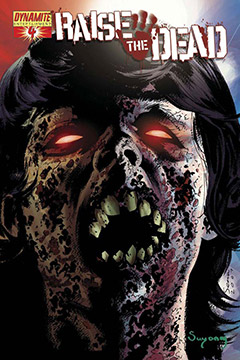
Revenant First Look! Raise The Dead #1 from Dynamite Ent. -posted 4/3/07
If there is one thing the world needs more of, it's zombie comics - good ones at that. Revenant's very own John Reppion and wife Leah Moore are set to bring us a new series entitled Raise The Dead and let me tell you, with these two helming the story, we're in good hands as zombie fans. With a slough of variant covers by artists Sean Phillips and Arthur Suydam, both of which you might remember from their work on 'Marvel Zombies', there will be plenty of collectibe covers as well. We just got a sneak at issue #1 and what initially struck me was the beautiful interior artwork by Hugo Petrus. He has a very vintage style which really adds to the atmosphere of the book. The first issue starts in the thick of it. It's drenched in action and unrelenting. A very explosive kickoff to the start of this incredible series. I don't want to give away too much but keep your eyes peeled for our review of issue #1. RAISE THE DEAD IS IN SHOPS ON APRIL 4TH ! |
|||||
|
|
|||||
|
|
|||||
|
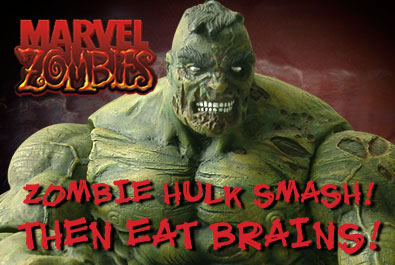
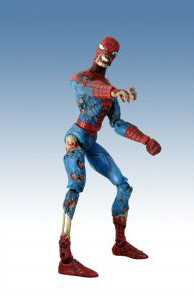
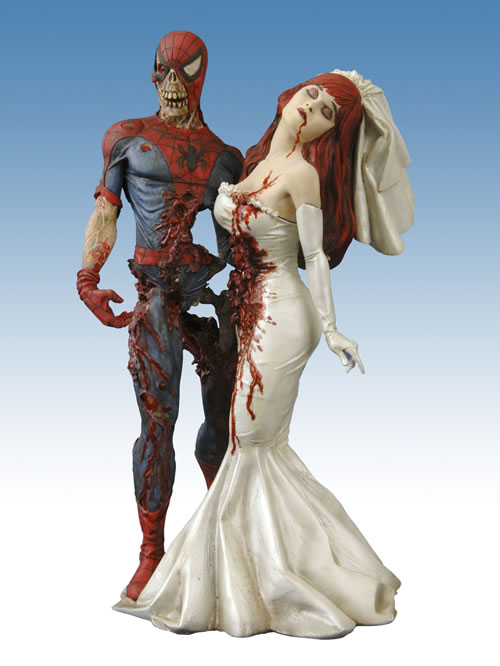
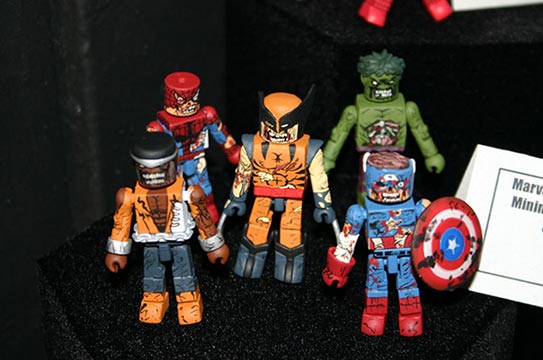
New Marvel Zombies figures coming from Diamond Select Toys! -posted 4/2/07
Diamond Select Toys and Marvel have teamed up to bring the wickedly popular Marvel Zombies universe to 3-D by way of 7-inch undead action figures, statues and minimate figures! Three figures have been announced thus far, Hulk (shown above), Colonel America and Spiderman. Each figure in the series will be packed with pieces of the doomed Silver Surfer. By collecting each figure, you can create the gruesome remains of Silver Surfer.
In addition to the 7-inch line of figures, Diamond Select will be releasing an incredible Marvel Zombies 9-inch statue of zombie Spiderman and Mary Jane together based on the cover of Marvel Zombies #5 (pictured below top). This piece will be limited to 2,000 pieces and is sculpted by Rudy Garcia. Each piece features a hand numbered base and comes complete with certificate of authenticity. SRP - $125.00 If that isn't enough zombie goodness for you, there's more...Marvel Zombies mini-mates are coming too (pictured below bottom)!
|
|||||
|
|
|||||
|
|
|||||
|
When I first shambled across zombiedollars.com I was immediately impressed with the idea. A crpyt of creativity, Zombiedollars acts as an online gallery of zombie artwork from artists all over the world. Zombiedollars founder and artist Nik Holmes loves his zombies and created zombiedollars so that artists from all over could share their artwork and love of zombies. Artists are able to submit their work via the site to be displayed in a virtual gallery. click the ZD head to check out the site
|
|||||
|
|
|||||
|
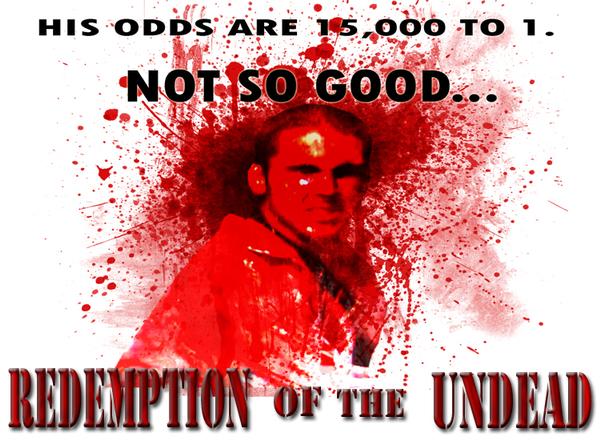
Want to be a zombie extra in the film Redemption of the Undead? -posted 3/25/07
Redemption of the Undead writer/director Matt Somerville needs more zombies to wrap-up his shoot. Shooting will be on weekends and zombie extras are needed ASAP! It's an unpaid job but extras will get end credits and fed while on set. If you are in the San Francisco Bay area or Northern California and would like to be a zombie in this incredibly badass film, get in touch with Matt. Don't miss our exclusive interview with Redemption of the Undead director Matt Somerville! Be sure to check out the trailer as well! |
|||||
|
|
|||||
|
|
|||||
New Article!! |
|||||
|
|
|||||
Fido takes a bite out of Vancouver!
We have been following the development of this film since first hearing about it. What an amazing journey this film has been through. Fido stars Billy Conolly, Carrie Anne Moss and K' Sun Ray in a whacky, roundabout comedy about life, love, (un)death, friendship and the human spirit. "Welcome to Willard, a small town lost in the idyllic world of the 50's, where the sun shines every day, everybody knows their neighbor, and rotting zombies deliver the mail. Timmy Robinson doesn't think so. At eleven, Timmy already knows the world is phony baloney - Mom and Dad just won't admit it. Now ZomCon's head of security has moved in across the street, and Timmy's Mom refuses to be the only housewife on the block who doesn't have a zombie of her own. When she brings a zombie servant home, Timmy discovers a new best friend, and names him Fido. And even though Dad has a bad case of zombie-phobia, Timmy is determined to keep Fido, even if he does eat the odd person... Sometimes, it takes a dead man to teach us all what it means to be alive." There was an advance screening of Fido in Vancouver on March 15th and from what I have heard, it was quite the good time. There were zombies handing out promotional materials, a Vancouver based zombiewalk was organized to coincide with the screening. Sounds like a blast. Fido opened in Canadian theaters on March 16th, 2007 and will be opening in US theatres on June 15th. |
|||||
|
|
|||||
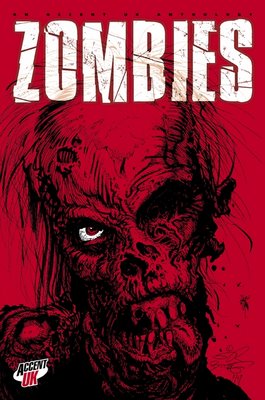
Accent UK's upcoming Zombie Anthology! -posted 2/15/07
Check out this incredibly awesome cover art by Stephen Bissette for Accent UK's upcoming zombie anthology. This is quite possibly one of the best comic events of the year! What do you get when you take a whole mess of amazingly talented writers that love zombies and combine their stories with the incredible artwork of some of the worlds top artists? You get this very tasty Zombie anthology from Accent UK! Tentatively releasing in May this book will be distributed in the UK and is looking like it may get distribution in the States through Diamond comics. Let's keep our fingers crossed. |
|||||
|
|
|||||
New Creature Feature album is now ready for pre-orders! -posted 1/25/07
Creature Feature is an insanely awesome 2 man band from Los Angeles that seriously rocks. Take 2 guys with an extreme love of all things horror, add in the fact that they are some amazing musicians and you have Creature Feature. I've been spreading the word about them since they released their now sold out EP a while back. Now armed with a full length album, Creature Feature is ready to battle the horde of the undead throughout the world. |
|||||
|
|
|||||
New site Bloodee.com caters to fans of horror! - posted 1/25/07
A new craze on the internet are sites like DIGG, which allow users to submit their own content (news stories, reviews, interviews, etc.) That content can then be voted on and ranked based on how relevant users think the submission is. Don't like a story? vote it down and it sinks into a bloodee grave while the good content stays on top. Bloodee.com focuses on the horror genre and allows horror content and news to be spread across the internet like a newswire by utilizing the 'bookmarklet.' By searching the web for your favorite horror content, bookmark it on bloodee.com by using the bloodee bookmarklet. It's really a quite fascinating idea so get over there and start spreading the news! For more information and to start your bloodee mission, go to www.bloodee.com |
|||||
|
|
|||||
|
|
|||||
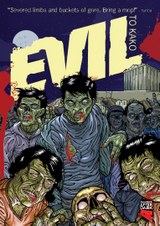
To Kako DVD release contest! -posted 1/17/07
Thanks to the very nice folks at TLA Releasing, we are giving you the chance to win your very own dvd of the first ever Greek zombie splat film! Check out our review of the film here |
|||||
|
|
|||||
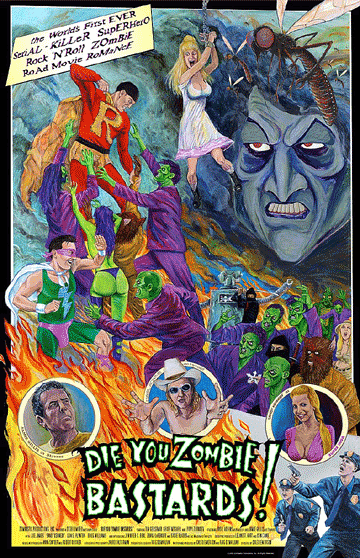
'Die You Zombie Bastards!' is out on dvd today! Go buy it NOW! -posted 1/16/07
DYZB! writer Haig Demarjian and director Caleb Emerson's wild serial killer, zombie, sex romp will finally be gracing our dvd players! The Die You Zombie Bastards! dvd hit store shelves today so support indiependent film making and extremely original content and pick this one up! Check out David L. Tamarin's interview with writer Haig Demarjian here: Haig - Interview |
|||||
|
|

 The very awesome website ZOMBIEDOLLARS.com is now back! Check them out! posted 3/28/07

~~~~~~~ ABOUT ~~~~~~~
John Reppion - Content Editor/Columnist
John is a freelance writer based in Liverpool, UK.
His career began in 2003 when he collaborated with his wife Leah Moore on the comic book mini series “Wild Girl” (published by Wildstorm in 2004/05).
When not co-scripting comics, John’s interests in Fortean phenomena, esoterica, folklore, philosophy, theology and horror have led to his writing articles and reviews for numerous magazines and periodicals including Fortean Times, Strange Attractor and The End is Nigh.
A lifelong fan of horror and all things zombie, John is proud to contribute to Revenant Magazine.
Wayne Simmons - Staff Writer/Contributor
Belfast born, Wayne Simmons, has been loitering with intent around the horror underground for some years. Having scribbled reviews and interviews for the likes of Pretty Scary, Zombie A-Go-Go, The Grindhouse and News Of the Dead, Wayne is now excited to be working with PREMIERE zombie site, Revenant.
Due to release his own debut (zombie-ish) horror novel – Drop Dead Gorgeous - towards the end of 2007, Wayne is working very hard with his publisher, Permuted Press, whose writers he has been known to offer up his candidly-cruel talents as HEATHEN-HORROR-HACK to (just ask Kim Paffenroth!).
In what little spare time Wayne has left, he enjoys walks by the shore, getting tattooed and listening to all manner of unseemly screeches on his BOOM-BOOM Box. Rumour also has it that the infamously unheard of bizarro E-Press, shiny HOO-HAA and Wayne enjoy something of a love-hate affair. Mostly love, of course…
Jenna Pitman - Contributor
Jenna Pitman is an aspiring author who has serials running on both Reventant Magazine and in the Seattle Sinner. She walks dogs in the Ballard and Queen Anne neighborhoods of Seattle, WA where she lives with her two dogs and cats. (in mass hysteria)
Jenna Pitman has been chronicling the plight of Haven for the past five years. Through multiple trips to the site and extensive research she has unearthed the true heart of the incident. After several court battles she managed to withstand pressure from both government agencies and private interest groups and finally gain leave to bring the true story to the public.
Steve Miller - Staff Writer/Contributor
Steve Miller is a writer, game designer, and editor who lives in Renton, Washington. He was a prolific contributor to the TSR/Wizards of the Coast gothic horror gameworld "Ravenloft", and he has created source-material for numerous other game-lines from several leading publishers.
He has also published and edited licensed fiction set in the "Star Wars" and "Dragonlance" universes. Steve's favorite zombie movies are "Dawn of the Dead", "White Zombie", and "The Plague of the Zombies," but, despite his old-school tastes, he is constantly watching for new visions of the walking dead, and he plans to share what he finds with the readers of Revenant Magazine.
~~~~~~~~~~~~~~~~~